
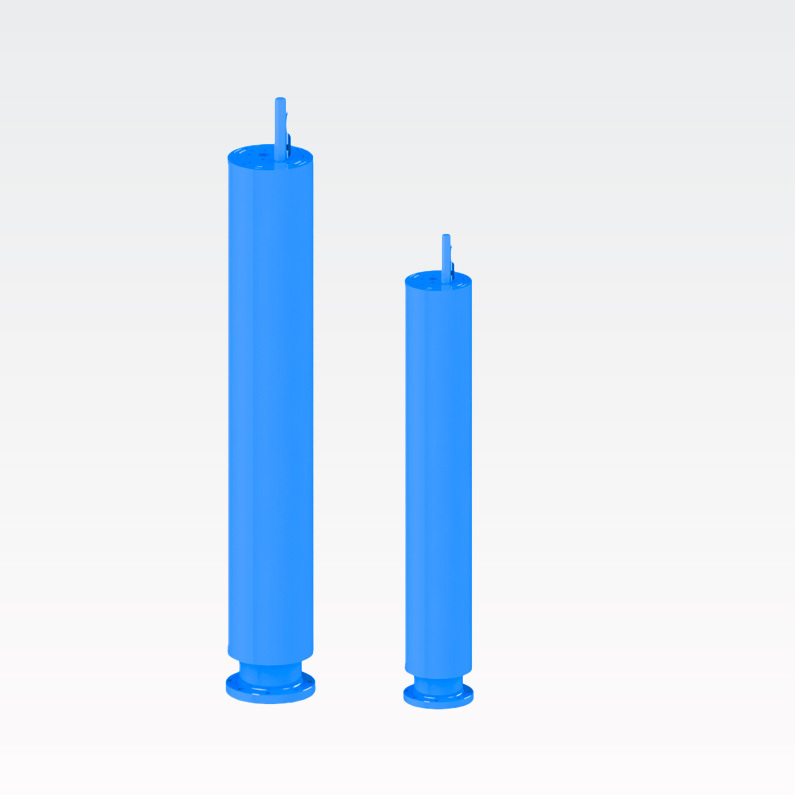
When operating conditions demand that the hydraulic flow characteristics supplied by the power source exhibit ultra‑high speeds and require local control, conventional hydraulic systems can no longer meet the requirements of on‑site high‑speed control. The solution is to shorten the fluid‑transmission system’s pipeline length and increase the control pressure to achieve a higher energy‑density output. Under such conditions, a pneumatic‑hydraulic intensifier provides an excellent solution.
The SCHWERLL gas–liquid intensifier can deliver a liquid pressure of 52.5 MPa at high flow rates. To shorten the fluid‑control path, a combined design integrating the liquid intensifier with a piston accumulator was developed, resulting in the SCHWERLL gas–liquid intensifier product.
When operating conditions demand hydraulic flow characteristics that deliver ultra‑high speeds and require on‑site control, conventional hydraulic systems can no longer meet the requirements for rapid local control. The solution is to shorten the fluid‑power circuitry and increase control pressure to achieve a higher energy‑density output. Under such conditions, pneumatic‑hydraulic intensifiers provide an excellent answer: in high‑pressure applications, they can deliver pressure ratios of up to 1:2.5. By integrating a pneumatic‑hydraulic intensifier into the hydraulic actuator while maintaining standard hydraulic system pressures, it becomes possible to generate extremely high‑pressure, localized flow rates, thereby enabling fast‑response control. In this context, outstanding solutions have been developed for processes ranging from the forming of high‑temperature aerospace components to semi‑solid die casting of composite materials, aluminum alloys, and magnesium alloys, as well as crash‑testing applications.
If defects in the design and manufacturing stages lead to severe cavitation during operation, selecting a high‑quality gas–liquid booster is essential for ensuring the stable performance of the host equipment.