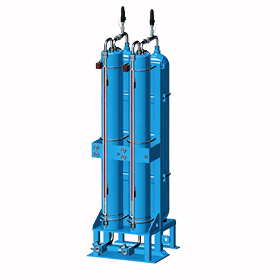
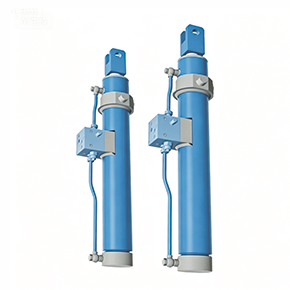
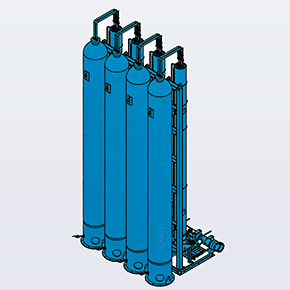
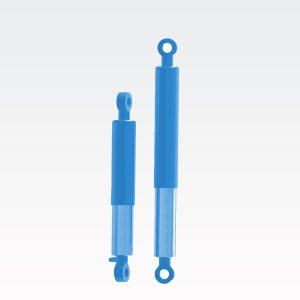
SCHWERLL offers piston‑accumulator‑based hydraulically controlled systems for heavy‑load lifting, opening, and emergency management. These systems feature a reliable energy‑monitoring piston accumulator configuration and an emergency‑management redundancy design. Additionally, in large‑scale operations involving heavy loads, SCHWERLL provides multi‑cylinder servo‑synchronized hydraulic control systems for simultaneous heavy‑load lifting, opening, and emergency response. These systems incorporate SCHWERLL’s core technologies: a robust piston accumulator system and a high‑precision servo‑synchronized actuation hydraulic control system, complemented by SCHWERLL’s dedicated emergency‑actuation module.
The hydraulic lifting and opening system is an electromechanical‑hydraulic integrated device that uses hydraulic pressure to automatically or assist in lifting heavy loads and opening/closing them—such as the jacking of large offshore platforms or the opening of manhole covers for underground utility networks. It is widely employed in construction, heavy‑load relocation, municipal drainage, integrated utility tunnels, and power cable pits. By harnessing a hydraulic pump station, a control valve assembly, and hydraulic cylinders, it generates substantial thrust, addressing the drawbacks of conventional manhole covers—namely their bulkiness, difficulty in opening, and low efficiency of manual maintenance.
1. Operating Principle
- Pressure transmission: When the system is started, the hydraulic pump delivers hydraulic fluid into the hydraulic cylinder.
- Lifting and Translating: The piston’s thrust enables the manhole cover to rise smoothly, flip open, or slide open.
- Return‑to‑zero positioning: By controlling the return flow of hydraulic fluid, the manhole cover descends smoothly and locks securely.
2. System Composition
- Power source: Small-scale opening systems employ miniature electric‑hydraulic pump stations or portable manual hydraulic units, while large‑capacity heavy‑duty opening devices utilize reliable oil‑pump motor assemblies and piston accumulators as their power sources.
- Actuating mechanism: high-strength hydraulic cylinder and hinged/translational robotic arm.
- Control system: electrical control box, remote controller, or an IoT-integrated smart control module.
3. Core Advantages
- Labor-saving and highly efficient: Significantly reduces the physical effort and time required to manually open heavy manhole covers.
- Safe and reliable: Equipped with a self-locking mechanism and fall‑prevention protection to prevent the manhole cover from accidentally slipping during operations.
- Sealed and Anti-Theft: The hydraulic clamping mechanism enhances the snug fit of the manhole cover, providing both waterproofing and anti-theft protection.