
Use our online accumulator volume sizing calculator to determine optimal capacity.
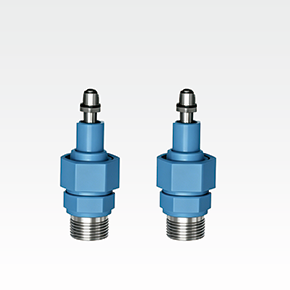
Open Volume Calculator →SCHWERLL liquid drain valves are typically installed at the bottom of gas cylinders or at the lowest point of a system. For certain horizontally mounted vessels, an internal stainless-steel flushing line may need to be pressurized. The standard product interface is G3/4–ISO 228 (the universally used connection size for gas cylinders). The design pressure is 350 bar, with a nominal diameter of DN 4 mm. Liquid drain valves for higher pressures are available, depending on the user’s operating conditions.
Contact Schwerll engineering sales directly for custom volume sizing, pressure ratings (up to 207 MPa), and volume pricing.
In a normally operating accumulator system, when pressure nitrogen becomes mixed with a small amount of air, the resulting pressure differential can cause liquid water molecules to precipitate out. Alternatively, failures in isolation components—such as seal wear—may result in the presence of liquid within the gas phase. Under the influence of this pressure differential, the liquid tends to settle at the lowest points of the gas‑filled system, such as the bottom of an accumulator vessel or the base of the cylinder. Over time, accumulated liquid reduces the available gas volume, leading to an increase in the gas’s initial pressure (P0). Moreover, moisture and other corrosive substances can accelerate corrosion and rusting of metal vessels. Therefore, accumulator systems should undergo regular maintenance and fluid drainage using a dedicated liquid‑drain valve manufactured by SCHWERLL.
SCHWERLL liquid drain valves are typically installed at the bottom of gas cylinders or at the lowest point of a system. For certain horizontally mounted vessels, an internal stainless-steel suction line must be added. The standard valve interface conforms to G3/4–ISO 228 (the universal connection size for gas cylinders), with a design pressure of 350 bar and a nominal diameter of DN 4 mm. Liquid drain valves rated for higher pressures are available, depending on the user’s operating conditions.