High-pressure hydraulic accumulators, piston cylinders, bladder units, safety valve blocks, and turn-key fluid power systems manufactured to ASME, CE/PED, and ISO standards.
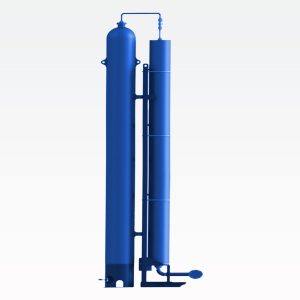
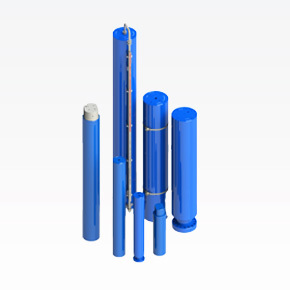
SCHWERLL manufactures a series of standard piston accumulators in strict compliance with the certification requirements for special‑purpose equipment in major countries and regions worldwide. These accumulators are designed to withstand pressures of up to 200 MPa, with individual units offering nominal volumes of up to 1,500 L. They are suitable for applications involving high‑frequency transfer functions at frequencies of 200 Hz and above, with piston speeds reaching a maximum of 9 m/s. SCHWERLL’s piston accumulators are engineered for a wide range of demanding operating conditions and media, and the company provides specialized solutions tailored to fluids such as water‑glycol, phosphate ester, and mineral hydraulic oils.
Schwerll standard piston accumulators are suitable for the vast majority of industrial applications, compatible with mineral hydraulic oils, water‑emulsions, water‑glycol fluids, phosphate esters, and other media. The products comply with the special‑equipment regulations and standards of the country or region in target installation jurisdictions. Individual piston accumulators offer capacities up to 1,500 L, with design pressures reaching as high as 207 MPa, and piston speeds of up to 5 m/s. SCHWERLL piston accumulators can be equipped with a variety of proven gas‑charged fluid‑level monitoring systems.
On mobile devices, aircraft, and marine vessels such as speedboats, there are stringent weight‑reduction requirements for accumulators. Sevier employs electron‑beam welding technology to manufacture lightweight piston accumulators that comply with pressure vessel codes, thereby meeting the diverse industrial applications that demand reduced weight.
Schwerll Company provides a stable and reliable piston displacement monitoring system for piston accumulators and their associated systems. Through displacement sensors installed on the gas side and externally, the system monitors the liquid level within the piston accumulator and calculates flow rate. This allows for monitoring of the gas energy within the piston accumulator or system, ensuring the accumulator’s operating status. Energy monitoring is especially crucial when the accumulator serves as a necessary power source for the system.