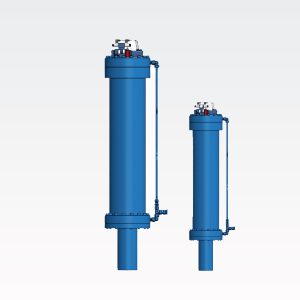
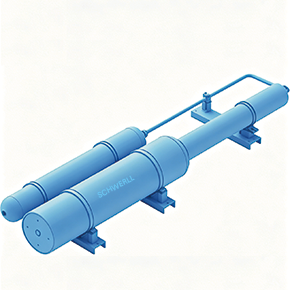
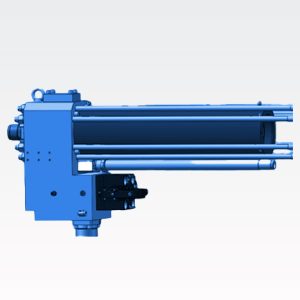
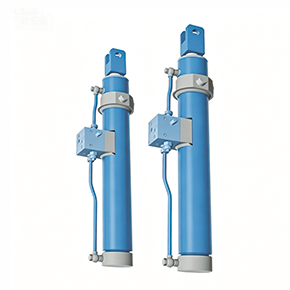
Traditional flow‑synchronization systems, such as those used for penstock gate valves in hydropower stations, typically require six sets of synchronizing servomotors. These systems rely on either synchronous motors or mechanical linkages—often employing a mechanical lead‑screw drive to achieve synchronization—but they suffer from issues like reduced accuracy due to wear and tear, as well as potential lead‑screw breakage caused by air pockets in the mechanical transmission. In contrast, the SCHWERLL hydraulic servo digital control system achieves digital synchronization via a hydraulic servo control loop and employs a multi‑channel hard‑sync cylinder design driven by piston accumulators equipped with energy‑monitoring capabilities. This enables emergency shutdown functionality under fault conditions, ensuring long‑term repeatability of synchronization accuracy and high‑precision hard synchronization even during complete power loss. Meeting the stringent requirements of applications such as penstock gate valves—where high precision, excellent repeatability, and reliable emergency synchronization under total power‑outage conditions are critical—the SCHWERLL system represents the optimal synchronization solution.
In closed-loop systems, the use of conventional hydraulic reservoirs is constrained by system dynamics and installation space; therefore, pressurized reservoirs must be employed to form a closed hydraulic circuit, thereby reducing the overall equipment footprint.
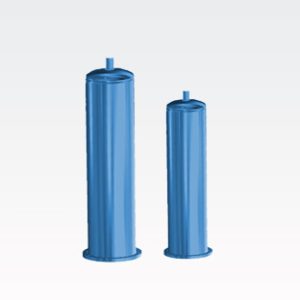
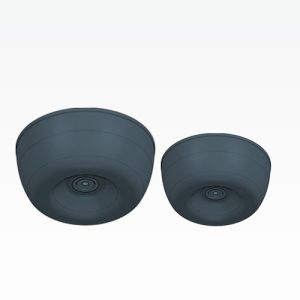
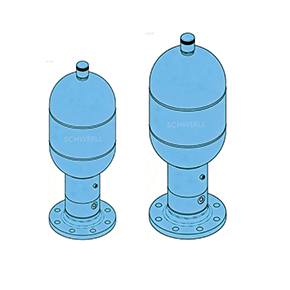
The diaphragms supplied by SCHWERLL for welded‑type diaphragm accumulators are low‑permeability diaphragms, manufactured in France. They are long‑term OEM components, with diaphragm capacities ranging from 0.1 L to 4 L.
When aluminum alloys, aluminum–magnesium alloys, magnesium alloys, and other metals are formed by die‑casting, it is necessary to account for the forming process, including rapid injection control (for shaping) and pressure‑holding control (for fine solidification). The forming process typically employs a piston‑accumulator system as the power source and is driven by a hydraulic servo‑controlled rapid‑forming system. As the actuating element, the hydraulic cylinder must achieve a piston‑rod speed of 8–12 m/s, necessitating the use of high‑speed servo‑driven injection cylinders to complete the injection‑forming operation. Key characteristics of these injection cylinders include:
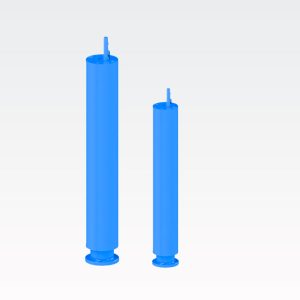
When operating conditions demand that the hydraulic flow characteristics supplied by the power source exhibit ultra‑high speeds and require local control, conventional hydraulic systems can no longer meet the requirements of on‑site high‑speed control. The solution is to shorten the fluid‑transmission system’s pipeline length and increase the control pressure to achieve a higher energy‑density output. Under such conditions, a pneumatic‑hydraulic intensifier provides an excellent solution.
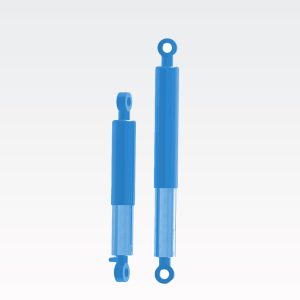
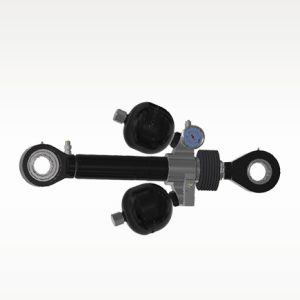
The SCHWERLL gas‑liquid piston‑type shock absorber is a high‑precision damping device. Compared with spring‑based dampers, it offers superior repeatability and smoother vibration suppression, and when installed in vehicle seats or speedboat seating, it can effectively enhance driver comfort.
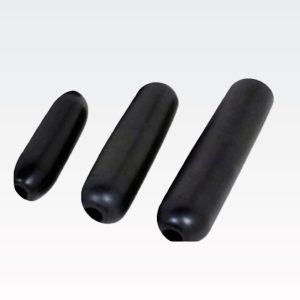
The bladder of SCHWERLL’s standard‑specification bladder accumulators is manufactured using an adhesive‑bonding process. Following simulation‑based design, the bladders are produced on a dedicated production line, delivering exceptional long‑term durability. The diaphragm exhibits low permeability, providing an ideal solution for high‑end applications.
When the system requires stable flow regulation for a liquid—such as cooling water—a stainless steel cooling‑water pressure regulator must be installed in the piping. This regulator stabilizes the system’s water pressure, thereby delivering cooling water at a consistent pressure to the load side.
The application of hydraulic balance cylinders in industrial robots and lifting platforms. The role of the closed system is to counteract the axial load torque, because the axial drive is not statically overloaded, and it can provide the maximum acceleration axial torque. The function of the enclosed gas in the diaphragm accumulator is equivalent to a mechanical spring.
At its core, the oil‑gas spring is a high‑performance vibration‑damping and load‑bearing solution designed for heavy‑load applications under harsh operating conditions. It integrates the elastic function of a conventional spring with the damping characteristics of a shock absorber, making it ideal for scenarios where standard suspension systems fall short or cannot deliver satisfactory performance.
In a closed-loop hydraulic system, the return oil tank, being sealed and integrated into the system circuit, experiences pressure fluctuations due to entrained air. Therefore, the tank must be equipped with a buffer to ensure stable operation of the entire closed system.
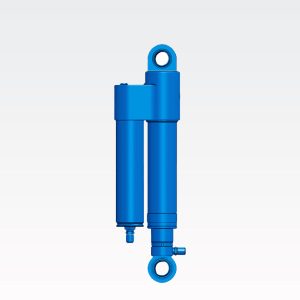
Unlike conventional double‑acting cylinders that have only two chambers—the rodless chamber and the rod side—three‑chamber cylinders, through a hollow piston rod, an internal core column, or a composite piston design, incorporate an additional third chamber (commonly the piston rod’s internal cavity, an auxiliary balance chamber, or an acceleration chamber). These three chambers can be supplied with fluid independently or in combination, enabling sophisticated motion control.