High-pressure hydraulic accumulators, piston cylinders, bladder units, safety valve blocks, and turn-key fluid power systems manufactured to ASME, CE/PED, and ISO standards.
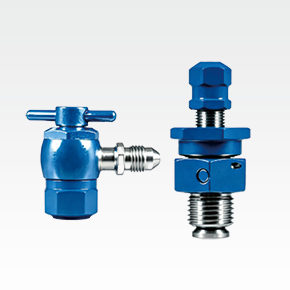
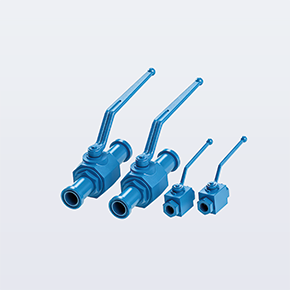
SCHWERLL offers high-pressure gas charging valves and gas charging valve manifolds. These valves (and manifolds) can be configured as integral components of standard accumulator assemblies, or installed as standalone valves or valve manifolds in pressure‑gas systems tailored to the specific process medium. Depending on application requirements—such as operating pressure, ambient temperature, and other parameters—customers may select from SCHWERLL’s range of specialized charging valves.
SCHWERLL supplies specialized high-pressure gas hoses for accumulator system nitrogen hose assemblies, nitrogen‑charging and pressurization carts, and other applications. These hoses are engineered and manufactured specifically for high‑pressure gas service, utilizing dedicated materials and incorporating a puncture‑resistant treatment on the rubber surface of the finished product. Additionally, the metal fittings should be selected with designs, sealing configurations, and thread types that are compatible with the operating gas pressures.
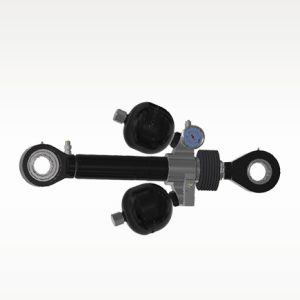
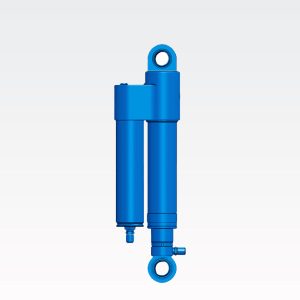
The application of hydraulic balance cylinders in industrial robots and lifting platforms. The role of the closed system is to counteract the axial load torque, because the axial drive is not statically overloaded, and it can provide the maximum acceleration axial torque. The function of the enclosed gas in the diaphragm accumulator is equivalent to a mechanical spring.
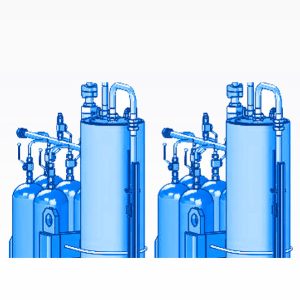
Based on a modular design, the overall volume (V0) of the piston accumulator system can be unlimited. To meet extremely high flow‑rate requirements under specific operating conditions—such as reducing the installed power of the host equipment and achieving energy savings—it is necessary to perform calculations and system matching using gas thermodynamic equations. SCHWERLL’s large‑capacity piston accumulator systems can deliver a single unit with a total volume of 100,000 liters or more. SCHWERLL ensures the supply of high‑quality, large‑scale piston accumulators through its proprietary design capabilities, in‑house facilities for constructing large systems, and comprehensive testing infrastructure.
On mobile devices, aircraft, and marine vessels such as speedboats, there are stringent weight‑reduction requirements for accumulators. Sevier employs electron‑beam welding technology to manufacture lightweight piston accumulators that comply with pressure vessel codes, thereby meeting the diverse industrial applications that demand reduced weight.
Imported leather and professionally manufactured diaphragms are used. The diaphragm shape and structure are designed using simulation to ensure reasonable compression and expansion characteristics. The diaphragm is made of all-natural rubber to ensure the best rubber properties. The diaphragm uses the most widely used adhesive integral molding process to ensure stable compression and oil discharge deformation characteristics, and high oil discharge stability. The diaphragm uses a special rubber adhesive to ensure the use characteristics after bonding. Diaphragm bags all strictly pass NF ISO 37 and other standard tests. A variety of rubber materials ensure more media adaptability. Low inherent permeability of rubber.
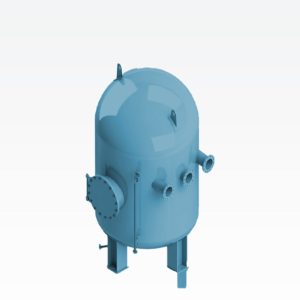
In medium- and low-pressure applications, oil–gas mixing tanks are used to control electro‑hydraulic servo systems, with water and air as the working fluids. Air is pressurized by an air compressor system. To ensure the reliability of the oil–gas mixing tank’s control, proper volumetric matching calculations must be performed, and a liquid‑level monitoring system should be installed.
Based on emergency operating requirements—such as the emergency actuation of hydraulic‑turbine governor servomotors, or the emergency closing of chemical‑process and hydropower inlet valves and circuit breakers when power is lost—the accumulator system serves as the system’s emergency power source. As an emergency power source, its fundamental operational characteristics must ensure that the energy stored in the accumulator remains under monitored, guaranteed‑operation conditions. Particularly in high‑pressure applications—e.g., when system pressure is ≥9 MPa—a piston‑type accumulator system equipped with an energy‑monitoring device is the required choice.
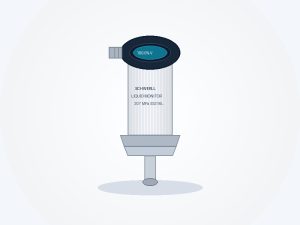
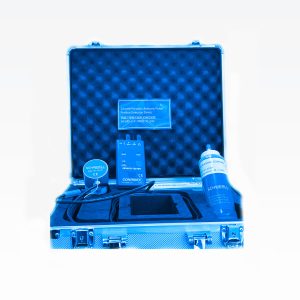
Schwerll Company provides a stable and reliable piston displacement monitoring system for piston accumulators and their associated systems. Through displacement sensors installed on the gas side and externally, the system monitors the liquid level within the piston accumulator and calculates flow rate. This allows for monitoring of the gas energy within the piston accumulator or system, ensuring the accumulator’s operating status. Energy monitoring is especially crucial when the accumulator serves as a necessary power source for the system.
At its core, the oil‑gas spring is a high‑performance vibration‑damping and load‑bearing solution designed for heavy‑load applications under harsh operating conditions. It integrates the elastic function of a conventional spring with the damping characteristics of a shock absorber, making it ideal for scenarios where standard suspension systems fall short or cannot deliver satisfactory performance.
In a closed-loop hydraulic system, the return oil tank, being sealed and integrated into the system circuit, experiences pressure fluctuations due to entrained air. Therefore, the tank must be equipped with a buffer to ensure stable operation of the entire closed system.
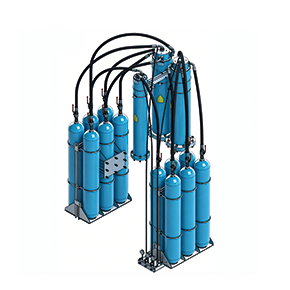
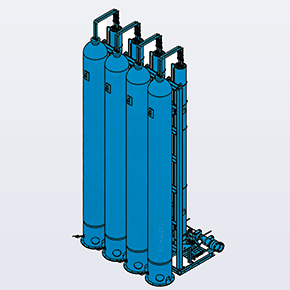
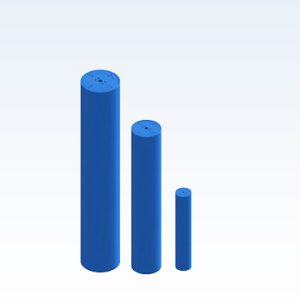
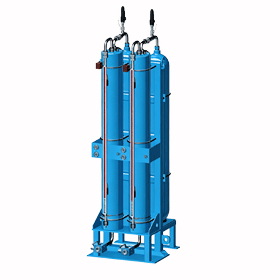
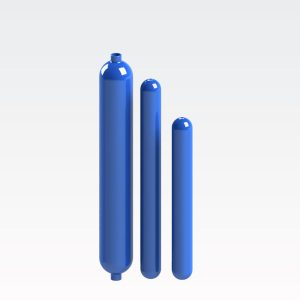
Standard seamless, fixed‑type pressure vessel cylinders are the most commonly used standby cylinders in accumulator systems. SCHWERLL offers customers standard pressure vessels and cylinder banks designed for cyclic stress, with common capacities ranging from 20 L, 35 L, 40 L, 50 L, 75 L, and 100 L up to 500 L, and typical design pressures of 20 MPa, 31.5 MPa, 35 MPa, and other specifications.
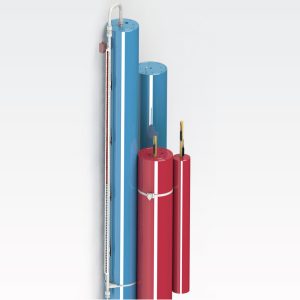
Column-type pressure vessels still fall under the category of pressure vessels. Structurally, they can be regarded as piston accumulators without pistons; their internal wall‑surface finish differs from that of piston accumulators. It is sufficient to ensure cleanliness and to meet the surface roughness requirements that accommodate gas‑induced expansion and cyclic stress. The primary consideration in selecting column‑type cylinders is installation convenience, though their cost is higher than that of standard pressure vessels.
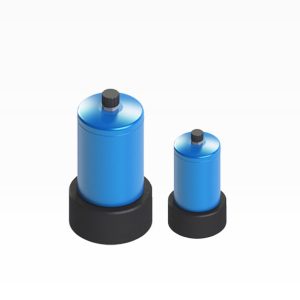
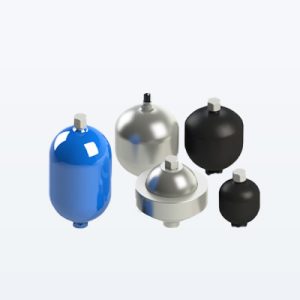
Severin threaded‑connection diaphragm accumulators are suitable for higher compression ratios—exceeding 4:1 and reaching up to 8:1—feature a serviceable design, and can be supplied in special materials such as stainless steel.
Unlike conventional double‑acting cylinders that have only two chambers—the rodless chamber and the rod side—three‑chamber cylinders, through a hollow piston rod, an internal core column, or a composite piston design, incorporate an additional third chamber (commonly the piston rod’s internal cavity, an auxiliary balance chamber, or an acceleration chamber). These three chambers can be supplied with fluid independently or in combination, enabling sophisticated motion control.